
Previous Why Am I Not Getting Coaching Clients? 7 Reasons

How to Create a Coaching Package That Is Easier to Buy
Coaches who wonder how to create a coaching package often begin by listing what they deliver: sessions, worksheets, messaging support and bonuses. But when a potential client still has to work out who the package is for, what will change and why the route fits, the offer becomes harder to choose. The problem is often not the coaching. It is the package structure.
-
Thom Bouman
- September 16, 2026
- 13 minutes
Table of Contents
ToggleThe hard-to-buy offer
Many coaches build a package by starting with what they can deliver: calls, a workbook, voice-note support and bonuses. At first, that feels concrete to you, but it may leave a potential client wondering what the package is designed to change.
However, a coaching client is not buying a number of sessions. Instead, they are deciding whether your support fits their problem and whether the result is worth moving toward. If that decision is difficult, the package can feel complicated even when the coaching is excellent.
For that reason, a good coach can have a valuable offer and still hear, “I need to think about it.” The issue may be the structure of the offer, not your expertise. For the wider pattern, read Why Am I Not Getting Coaching Clients? 7 Reasons.
- Who is this package for?
- What meaningful change is it designed to support?
- How does the support help the client get there?
- What is the next step?
A coaching package should make the buying decision easier before it explains every delivery detail.
What Makes a Coaching Package Easy to Understand
Start With the Client’s Decision
If you are learning how to create a coaching package, start with the client’s decision, not your delivery list. A package is easier to buy when a client can quickly see four things:
- The situation the package is designed for.
- The meaningful change it is designed to support.
- The route from the starting point to that change.
- The next decision the client needs to make.
Most packages explain delivery before they explain the decision. They lead with sessions, worksheets and messaging access. However, those details may matter without answering whether this is the right kind of help for the buyer’s situation.
When that answer is unclear, people compare the number of sessions, the bonuses or the price because those are the only differences they can see. They may conclude that the package is too expensive. However, the value may simply be hidden inside a delivery list.
In other words, the basic logic behind how to create a coaching package is to make the value understandable before the buyer has to compare details.
The buyer should not have to translate your delivery into a personal outcome.
SECTION 1
How to Create a Coaching Package Around One Clear Outcome
In practice, the strongest coaching packages are built around one client situation and one primary outcome. The client may experience several benefits, but one central promise gives every part of the offer a role.
Start With One Client and One Buying Situation
“I help people build confidence” is a topic, not yet a strong reason to buy a package.
Instead, start with a recognizable situation:
This package is for newly promoted managers who keep second-guessing themselves, avoid difficult conversations and carry work-related pressure into the evening.
That sentence helps the right person recognize themselves. In addition, it gives you a basis for deciding what belongs in the package.
For example, the buying situation usually creates stronger recognition than a demographic label alone:
- A health coach may work with professionals who keep restarting their health plan every Monday.
- A career coach may help experienced specialists who want to change direction but do not trust their decision.
As a result, the more clearly the package reflects that moment, the less work the potential client has to do to decide whether it is relevant. For help refining the language around the person, problem and outcome, see How to Describe What You Do as a Coach.
Choose One Transformation
Instead, the central outcome should describe a meaningful change, not a list of topics covered during coaching.
Confidence, mindset, boundaries and clarity may be part of your method. In practice, however, they are not necessarily the transformation the client is buying.
Topic-led
A twelve-week confidence coaching package with mindset exercises and accountability.
Outcome-led
A twelve-week package for capable professionals who want to stop second-guessing important decisions and act with more calm and conviction.
By contrast, the second version gives the package a direction. It tells you what to coach, what to leave out and what progress should look like.
You can use this simple transformation statement:
I help [specific client] move from [current problem] to [desired change] through [your route or approach].
One transformation does not have to be small. It needs to be coherent. For example, a leadership package might support better decisions, communication and boundaries, while the central transformation is leading with steadier focus under pressure.
Therefore, when you know how to create a coaching package around a real buying situation, you can decide what belongs in it. However, if you cannot explain the package without listing unrelated outcomes, it may be trying to solve too many problems at once.
SECTION 2
Turn Coaching Package Features Into a Transformation
Learning how to create a coaching package also means deciding how each part of the support makes the outcome possible. Once the outcome is clear, review every element of the package. Instead of asking only whether an item is useful, ask what job it performs in the transformation.
Give Every Feature a Job
- Coaching sessions. They create the space to understand the situation, make decisions and work through obstacles.
- Exercises or worksheets. They help the client reflect, prepare or apply the work between sessions.
- Feedback. It helps the client notice blind spots and correct course before an unhelpful pattern becomes permanent.
- Between-session support. It helps the client use the new approach in a real situation instead of waiting for the next appointment.
- A final review. It helps the client recognize what has changed and decide how to continue independently.
As a result, this turns a feature list into a route. The client understands what is included and why.
In addition, the same principle applies to bonuses. Additional material is not automatically valuable. If it does not support the primary outcome, it may create distraction. For example, a large resource library can make a focused package feel like homework. Therefore, explain the format, rhythm and support, but let those details serve the transformation.
SECTION 3
Choose the Right Coaching Package Duration, Scope and Support
If you are deciding how to create a coaching package, there is no universally correct length. It should last long enough for the transformation to be understood, practised and reinforced, not twelve weeks simply because that is familiar.
Instead, consider three points:
- What needs to happen before the client can make meaningful progress?
- How much time do they need to practise the new behaviour or decision?
- What will show that the package has reached a natural completion point?
The answers help you choose a credible duration and rhythm. For example, a package might begin with weekly sessions, then move to less frequent check-ins as the client applies and maintains the change.
Set Boundaries Around the Support
Scope is equally important. Tell the client what support is included and what it is not:
- Session type and frequency.
- Between-session communication and response times.
- Rescheduling and missed appointments.
- The client’s work between sessions.
- The package’s end or review point.
As a result, boundaries make a package feel considered and dependable. They also stop you adding unlimited access because you are worried it does not contain enough value.
At the same time, pricing is separate from package architecture. First make the transformation, scope and support clear. For the perception that exists before a proposal, see Price Resistance: The Sale Starts Before the Proposal.
Finally, relevant proof should reinforce the package’s promise. Use a specific testimonial, result or credential where it supports the decision.
SECTION 4
One Core Coaching Package or Several Options
Many coaches create several packages because they believe more choice will help people buy. In reality, however, it often creates another decision to solve.
For that reason, one core package may be clearest when you serve one audience with one main transformation. It gives your message a centre and makes the offer easier to improve.
Several options can make sense when each serves a genuinely different situation or outcome. For example, one package might support a difficult career decision while another helps a manager lead a team through change.
Choose by Situation, Not by Session Count
If you are deciding how to create a coaching package with several options, begin with the situations and outcomes, not with bronze, silver and gold labels.
Confusion usually comes from tiers that promise the same change but differ mainly in calls, access or bonuses:
- Bronze: four sessions.
- Silver: eight sessions.
- Gold: twelve sessions plus messaging.
The buyer still has to work out which level is right. Therefore, if the difference is not connected to a different stage, situation or outcome, present one clear package with a defined scope.
Therefore, as shown in Same Offer Same Price Better Clients, people make better-fit decisions when they can recognize which route fits instead of comparing a menu of features.
SECTION 5
A Coaching Package Example: Before and After
In practice, this coaching package example shows how a session-led package becomes easier to understand. It also shows how to create a coaching package without adding more features.
Compare the Package Before and After
Before
12-Week Mindset Coaching Package
- Twelve weekly sixty-minute sessions.
- Unlimited messaging.
- Personalised exercises.
- Mindset tools.
- Weekly accountability.
This may describe a good service, but it leaves the buyer to work out whether it fits and what change it supports.
After
Steady Under Pressure
For capable professionals who keep carrying work into the evening, second-guess important decisions and feel responsible for holding everything together.
Over twelve weeks, we work from identifying the patterns that keep you switched on to building a steadier way to decide, communicate and protect your attention. You receive focused coaching, practical exercises between sessions and defined message support for applying the work to real situations.
Still, the second version has the same basic ingredients: sessions, exercises and support. In other words, nothing had to be invented. Every element now sits inside one transformation:
From constantly carrying pressure and second-guessing yourself to leading and deciding with steadier focus.
The package is not promising a permanently effortless life. Instead, it describes the change the coaching is designed to support. As a result, the coaching offer becomes more believable and easier to buy.
SECTION 6
Test Your Coaching Package Before You Add More
Before you add sessions, bonuses or resources, make sure people understand the package. Test the explanation first.
Ask for Understanding Before Adding More
For example, use the package in a conversation, on your website or in a short message. Ask the person to describe what they think it is designed to help someone change.
If they repeat the outcome in their own words, the structure is doing its job. However, if they talk mainly about sessions or which tier gives them the most, the transformation may still be hidden. In that case, simplify the explanation before adding more value.
ACTION STEP
Ask three people who fit your intended audience to explain your package in their own words. Listen for these signals:
- They cannot tell who the package is for.
- They cannot describe what would change.
- They do not know what happens first or which option fits.
Use a Simple Package Model
Use this fill-in model to review your package:
PACKAGE MODEL
[Package name] is for [specific person] who is [recognizable situation]. It helps them move from [current problem] to [primary outcome] through [three or four stages of your route].
It includes [support that makes the transformation possible], with clear boundaries around [scope and communication]. The next step is [one simple action].
The model exposes gaps in the offer. If you cannot complete one part without adding another promise, simplify the package before redesigning the sales page. In other words, fix the route before you add more detail.
Finally, that is the practical test for how to create a coaching package: every element should help the client understand the route or apply the change.
If you are deciding what to include in a coaching package, choose the elements that help the client move from the starting situation toward the intended outcome. That may include sessions, exercises, feedback and between-session support. Explain each element’s purpose and set boundaries around access, communication and completion. A package should feel like a coherent route, not a collection of everything you could provide.
There is no fixed ideal length. Choose a duration that gives the client time to understand the problem, apply new decisions or behaviours and reinforce the change. The right length depends on the transformation and support required. A clear beginning and completion point are more useful than choosing four, eight or twelve weeks by habit.
Start with one core package when you serve one main audience with one central transformation. Add another option only for a genuinely different situation, stage or outcome. Tiers that promise the same change but offer different numbers of sessions often create more uncertainty. If people cannot tell which package fits, simplify the choice.
That depends on your sales process, market and variation between clients. Price is easier to evaluate once the client understands who the package is for, what it is designed to change and what support is included. Whether you publish it or discuss it later, do not use extra features to make an unclear package appear more valuable. Clarity comes first.
The terms overlap. A package usually describes a defined container of coaching, support and duration. A program often suggests a more structured sequence or curriculum. Neither term automatically makes an offer easier to choose. What matters is whether the client recognizes the situation, understands the transformation and sees how the support leads to it.
Key Takeaways
- Build the package around one recognizable client situation and one primary transformation.
- Show the route from the starting point to the desired change.
- Include only the support that helps the client make that change.
- Set a clear duration, scope and communication boundary.
- Test whether people understand the package before adding more features.
Make Your Coaching Offer Easier to Choose
Creating a coaching package is not mainly about adding value. It is about making value understandable.
When the right person can recognize their situation, see one meaningful outcome and understand the route, the package feels like a relevant next step. They no longer have to compare every detail to work out what you mean.
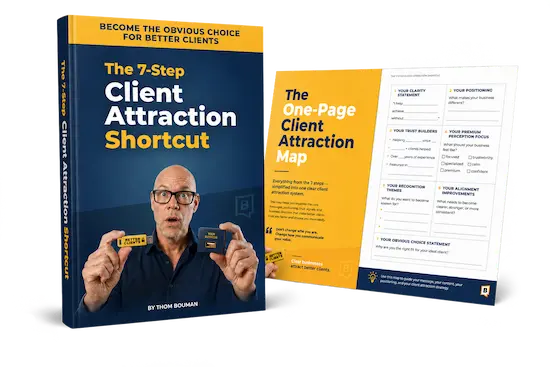
That clarity is one part of a larger client-attraction system. The 7-Step Client Attraction Shortcut helps you correct the signals that make a good business harder to understand, from the right client and offer to your website message.
Get The 7-Step Client Attraction Shortcut
Instant access · Starting at $17 · 30-day guarantee

Thom Bouman
Brand & Marketing Consultant | Art Director | Helping Businesses Communicate Their Value More Clearly | Since 1992
THE NEXT STEP
Make your value obvious sooner
The 7-Step Client Attraction Shortcut helps you identify and correct the hidden signals that make a good business harder to understand than it needs to be.
Instant access · Starting at $17 · 30-day guarantee