
CLIENT ATTRACTION INSIGHTS
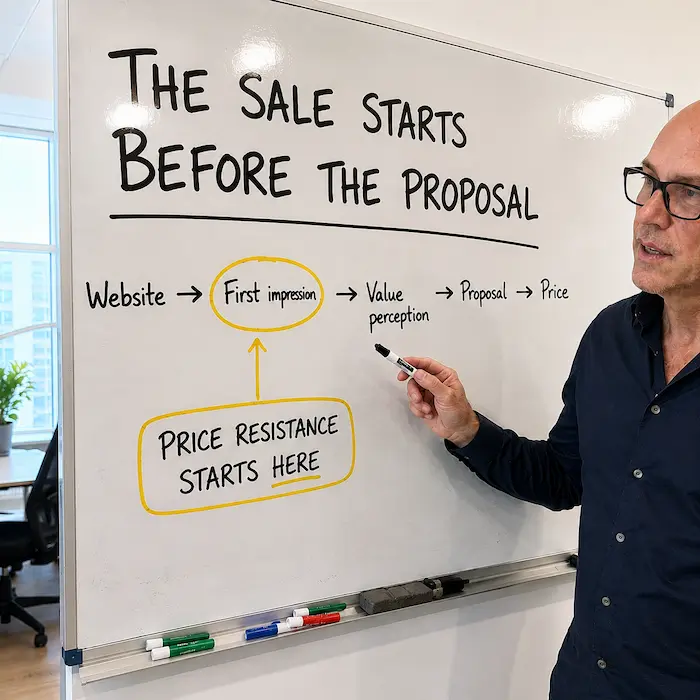
The Sale Starts Before the Proposal
Why price resistance can begin before your quote, and what to make clearer while prospects are still deciding.
-
Thom Bouman
- August 31, 2026
- 5 minutes
Table of Contents
TogglePrice resistance can feel like a problem with the number at the bottom of your proposal.
A prospect asks for a quote. The conversation seems promising. Then they ask whether you can do it for less.
So you review the price, add more detail, or consider including something extra. Those changes might help. But they can also leave an earlier problem untouched.
Before the quote arrived, what did that person already believe about your service?
If they saw little difference between you and the next provider, the price landed in that context.
Why price resistance can start before the proposal
Before someone contacts you, they may read your homepage, browse your profile, or look at an example of your work.
Along the way, they form a view of who you help, what you offer, and whether you seem worth talking to. As a result, the sales conversation starts with expectations already in place.
Perhaps your website lists the same services as several others. Maybe it describes your process without showing why that process matters. Or the promise sounds useful, but the visitor cannot tell whether it fits their situation.
You may do excellent work.
Yet a first-time visitor can only judge the information in front of them.
When the proposal arrives, the prospect can count the hours, sessions, or deliverables. They can compare the total too. Meanwhile, the reasons to choose you may still be unclear.
That is one way price resistance can take shape before you ever discuss the fee.
A good service can still look like every other option
Consider this illustrative example for a freelance web designer:
Five-page website. Mobile-friendly. Contact form included.
The description tells a buyer what they get. However, it gives them little reason to prefer this designer over another with the same list.
Now consider a different opening for the same service:
A website that helps prospective clients understand your consulting service and take the next step.
The pages and contact form still matter. But now the buyer has a reason to care about them.
The second version also needs support. Relevant work examples and a clear process would help the buyer judge whether the designer can deliver.
The service has not changed. The reader now sees what the work is meant to help them achieve. As a result, there is more to discuss than the number of pages and the price.
What gives a prospect a reason to choose you
To make that shift, look at four questions your website or profile needs to answer.
Is this relevant to my situation?
Start with a situation the right client can recognize. For example, a consultant may need to explain a complex service more clearly. That gives them more to connect with than a broad promise to help every business grow.
What would this help me do?
Explain the purpose of the work. A client needs to understand why the sessions, advice, or design matter. Otherwise, the list tells them what they will pay for without making the value clear.
Why would I choose this person?
Give a relevant reason. It might be experience with their type of problem, a useful specialty, or a clear approach. However, phrases like “high quality” and “personal service” leave room for almost any competitor to say the same.
What makes this credible?
Use real work, relevant experience, and clear information about how you work. Also make it easy to see who you are and how to contact you.
Stanford’s web credibility guidelines likewise emphasize visible expertise, clear contact details, and appropriate professional design. The point is to give people useful reasons to trust what they see.
Together, the answers give a prospect more than price to consider.
Why a better proposal may not solve price resistance
A clear proposal still matters. It should explain the scope, fee, and next steps. But it cannot always repair every gap in the message that came before it.
For example, adding more deliverables may strengthen the package while leaving the buyer unsure why they need it. Similarly, a discount can make the price easier to accept without clarifying the value.
Before changing either, review what led the prospect to request the quote. Were they looking for your approach, or collecting prices for a service that seemed much the same everywhere?
Of course, some price resistance reflects a real budget limit. Timing or fit may also be wrong.
Clearer positioning cannot turn every inquiry into a suitable client.
Instead, it gives the right prospects a better basis for deciding whether your service fits.
Check the message before you change the price
Open the page or profile someone is likely to see before contacting you. Read it without adding the explanation you would give in a call.
Then ask:
- Who is this for? Does the page name a client or situation clearly enough?
- What would this help them do? Is the value clear beyond the list of services?
- Why choose this approach? Can someone see a relevant difference?
- What supports the promise? Is there real evidence they can assess?
If you need to explain each answer out loud, the page may be relying on you to fill in the gaps.
Start with the least clear answer. Then check whether your headline, examples, and next step support it. This gives you a focused place to work before changing your fee.
A practical way to make your value clearer
Spotting a gap is a useful start. The next task is deciding what to clarify and how to carry that message through your business.
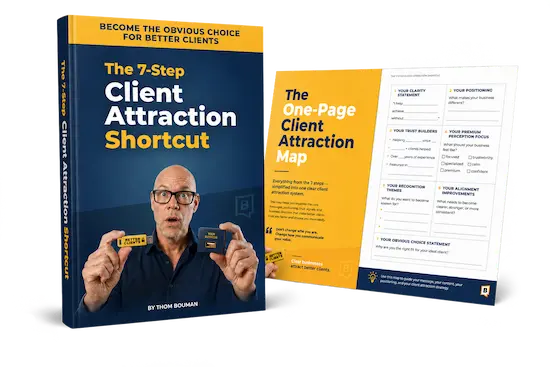
I created The 7-Step Client Attraction Shortcut to help solo service providers examine the signals their business sends. The aim is to make your value easier for the right clients to understand before they compare on price.
The Starter package includes the core guide and the One-Page Client Attraction Map.
You receive digital PDF materials to read and work through yourself.
If you want more support, the Shortcut package adds the Premium Perception Guide and Client Clarity Checklist. The Accelerator package also includes resources for homepage copy, calls to action, and client messaging.
You can choose the level of support that fits where you are now.
Make the difference clear before the quote
If price resistance keeps showing up, review what prospects understand before you send the next proposal.
They need a reason to see why your service fits their situation. Your quote can then build on that understanding.
The 7-Step Client Attraction Shortcut gives you a structured starting point.
Starter is $17, Shortcut is $27, and Accelerator is $47. All three come with a 30-day money-back guarantee.
See the 7-Step Client Attraction Shortcut
Instant PDF access · Packages from $17 · 30-day money-back guarantee
THE NEXT STEP
Make your value obvious sooner
The 7-Step Client Attraction Shortcut helps you identify and correct the hidden signals that make a good business harder to understand than it needs to be.
Instant access · Starting at $17 · 30-day guarantee